
A pre-stitched saree has its pleats and pallu sewn into a ready-to-wear garment — you wear it like a skirt and drape the pallu over your shoulder in under five minutes. A traditionally draped saree is 5–9 yards of unstitched fabric that is pleated, tucked, and draped by hand each time you wear it, offering more styling versatility but requiring skill and time. Both look similar from the outside; the difference is entirely in how they are worn and what they offer.
This guide breaks down every difference so you can choose the right option for your lifestyle, occasion, and experience level.

At a Glance: Pre-stitched vs Traditional Drape
| Feature | Pre-stitched Saree | Traditional Drape |
|---|---|---|
| Wearing time | 2–5 minutes | 10–20 minutes |
| Skill required | None | Moderate to high |
| Draping styles available | Fixed (usually Nivi) | 80+ regional styles |
| Appearance | Near-identical to traditional | Authentic; more fluid when done well |
| Stays in place | Yes — stitched permanently | Depends on pinning and tucking |
| Comfort | High — no risk of coming undone | Can shift during long wear |
| Reusability across styles | Limited | High — one saree, many looks |
| Price | Slightly higher (stitching cost added) | Varies widely |
| Best for | Beginners, travel, office, events | Weddings, traditional occasions, experienced wearers |
| Fabric options | Most fabrics available | All fabrics available |
What Is a Pre-stitched Saree?
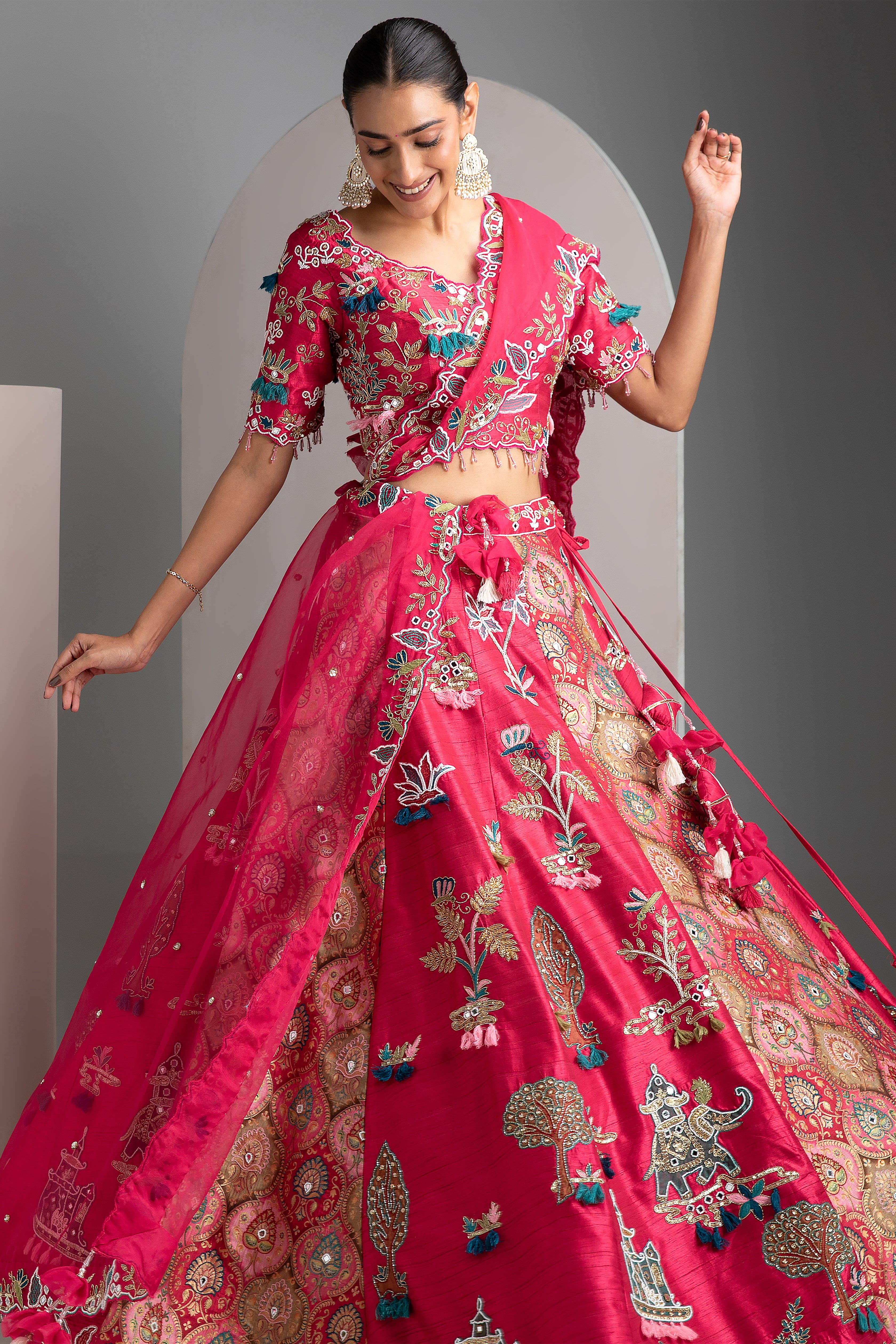
A pre-stitched saree — also called a ready-to-wear saree, concept saree, or ready-pleated saree — is a traditionally designed saree that has been tailored into a two-piece or one-piece wearable garment. The pleats at the front are sewn in permanently, and the pallu (the decorative end piece that falls over the shoulder) is either attached or comes as a separate drape.
Types of pre-stitched sarees:
| Type | How It Works | Skill Level |
|---|---|---|
| Fully stitched | Pleated skirt + attached pallu — wear like a skirt | Zero |
| Half-stitched | Pleats stitched; pallu is loose fabric to drape manually | Beginner |
| Belt saree | Unstitched saree held in place with a belt or corset | Low |
| Draped concept saree | Pre-pinned into a specific drape style; step in and adjust | Beginner |
The fully stitched variant is what most people mean when they say "pre-stitched saree." It is essentially a saree-skirt with a pallu — the complete look of a saree without any of the draping process.
What Is a Traditionally Draped Saree?
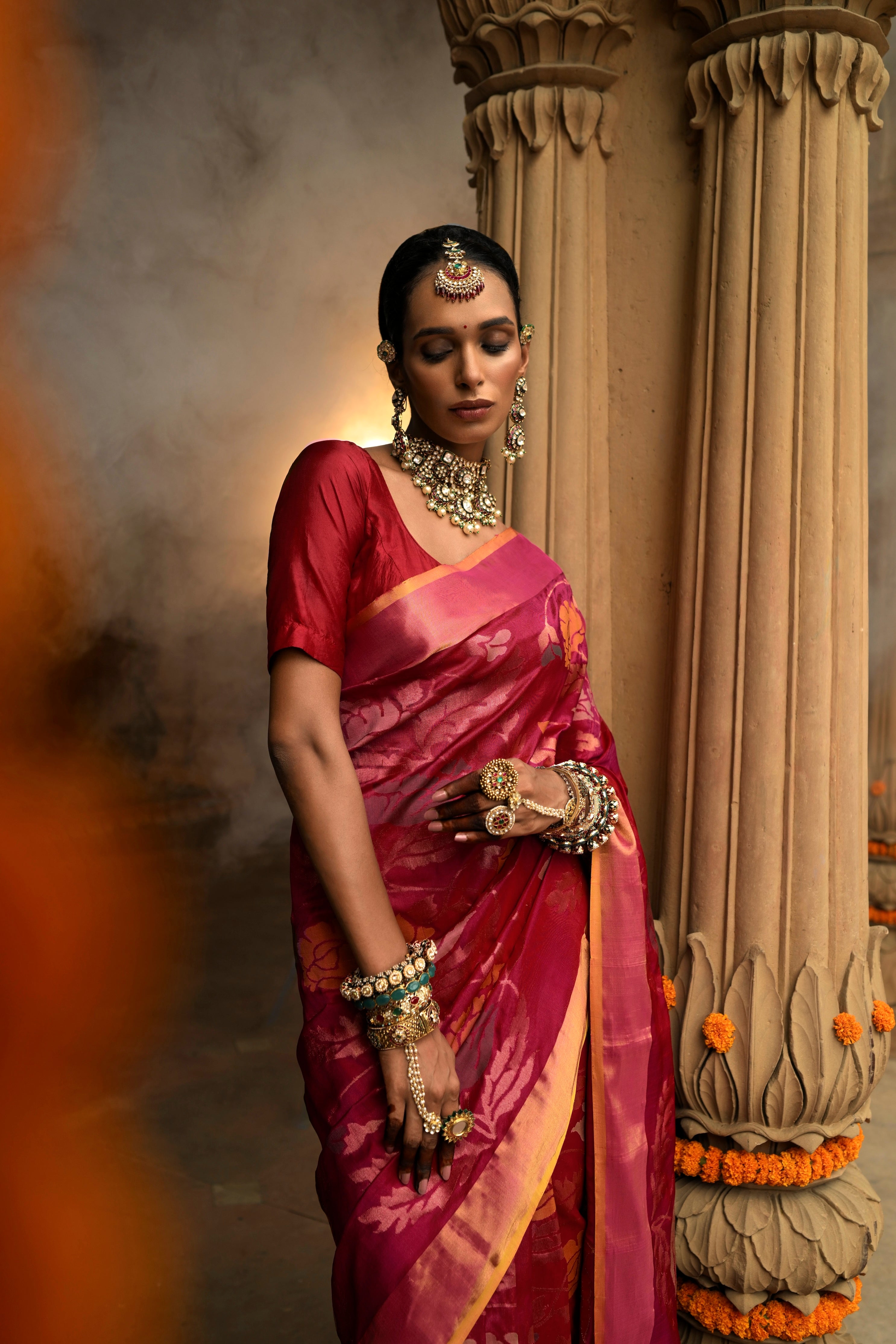
A traditionally draped saree is 5.5 to 9 yards of unstitched fabric — pure fabric, no stitching at all. Every time you wear it, you drape it from scratch: tucking pleats into your petticoat, wrapping the fabric around your waist, and draping the pallu over your shoulder or across your body.
The most common draping style is the Nivi drape (the standard style seen most frequently across India). But the same piece of fabric can be worn in dramatically different ways depending on region and occasion:
| Draping Style | Region | Distinguishing Feature |
|---|---|---|
| Nivi | Pan-India (Andhra origin) | Pleats in front, pallu over left shoulder |
| Bengali | West Bengal | Pallu from back over right shoulder, no pins |
| Gujarati / Seedha Pallu | Gujarat | Pallu draped front-to-back, over right shoulder |
| Maharashtrian (Nauvari) | Maharashtra | 9-yard saree draped like a dhoti |
| Coorg | Karnataka | Pallu pinned at back, pleats at back |
| Tamil / Madisar | Tamil Nadu | 9-yard traditional Brahmin drape |
| Kasavu / Kerala style | Kerala | Minimal pleats, pallu loosely draped |
This versatility is one of the greatest strengths of traditional draping — a single saree becomes multiple looks across different styles and occasions.
Pros and Cons: Pre-stitched Saree
Pros ✅
1. Takes under 5 minutes to wear
The single biggest advantage. You can be ready in the time it takes to put on a skirt. No pleating, no tucking, no risk of uneven folds.
2. Stays perfectly in place all day
Because the pleats are stitched, nothing shifts. You can dance, travel, sit, stand, and move freely without adjusting or re-pinning.
3. No experience needed
You do not need to know how to drape a saree. This makes pre-stitched sarees ideal for first-time saree wearers, younger women, or non-Indian guests at Indian events.
4. Ideal for travel
Pre-stitched sarees pack and travel well. There's no need to redrape after arrival — put it on and you're done.
5. Consistent appearance
Every time you wear it, the pleats fall identically. There's no variation from a bad drape on a rushed morning.
Cons ❌
1. Fixed draping style
A pre-stitched saree is stitched into one style — usually Nivi. You cannot rewear it in a Bengali drape, a Gujarati drape, or any other regional style.
2. Less authentic feel for traditionalists
At formal traditional ceremonies — particularly religious rituals, weddings where the bride is expected to drape traditionally, or occasions governed by regional customs — a pre-stitched saree may not be considered appropriate.
3. Slightly less fluid in movement
The stitched pleats are uniform but slightly stiffer than hand-pleated fabric that moves naturally with the body.
4. Alteration is difficult
If your body changes or you want to adjust the fall, a pre-stitched saree is harder to alter than an unstitched drape.
5. Higher entry price for the same fabric
You pay a stitching surcharge on top of the fabric cost. For the same saree design, a pre-stitched version will typically cost ₹500–₹2,000 more.
Pros and Cons: Traditional Drape
Pros ✅
1. Authentic and versatile
The same saree can be worn in 5–10 different regional styles. Your wardrobe multiplies — one saree, multiple looks.
2. More elegant when draped well
A hand-pleated traditional drape with even folds and a well-settled pallu has a fluidity and elegance that stitched versions approximate but don't fully replicate.
3. Fully adjustable to your body
You control how tight, how loose, how low, and how high the saree sits. You can customise the drape to flatter your specific proportions each time.
4. Appropriate for all occasions
Traditional drape is appropriate everywhere — casual, formal, religious, bridal. Pre-stitched sarees carry some limits in very traditional settings.
5. Investment value
An unstitched saree retains its full value. A pre-stitched saree cannot be "unstitched" back to full fabric.
Cons ❌
1. Requires skill and practice
Draping a saree well takes time to learn. Uneven pleats, a slipping pallu, or a hem that's too long or short are common beginner issues.
2. Can come undone
Without proper pinning, a traditionally draped saree can shift during long hours of wear — especially during dancing, travel, or active movement.
3. Takes 10–20 minutes
On a rushed morning, draping a saree adds significant time to your routine. For daily office wear, this is a real barrier for many women.
4. Often requires help
Many women need assistance to drape correctly, particularly with heavier silk sarees or regional styles beyond Nivi.
Which Should You Choose?
Choose a pre-stitched saree if:
- You're wearing a saree for the first time
- You have a packed schedule and need to be ready quickly
- You're attending an event where you'll be on your feet or moving a lot
- You're travelling and need a saree that's ready in minutes at your destination
- You're a non-Indian guest at an Indian event and want the saree look without the learning curve
Choose a traditional drape if:
- You're attending a wedding, religious ceremony, or cultural event where traditional draping is expected
- You already know how to drape or have someone to help you
- You want to wear the saree in multiple styles across different occasions
- You're purchasing a heritage or investment saree (Kanjivaram, Banarasi) — these are best preserved unstitched
- You want the full authentic saree experience
Occasion Guide: Which Works Where?
| Occasion | Pre-stitched | Traditional Drape |
|---|---|---|
| Wedding guest | ✅ | ✅ |
| Bride at wedding | ❌ (not traditional) | ✅ |
| Office / corporate event | ✅ | ✅ |
| Casual festive (Diwali, Eid) | ✅ | ✅ |
| Religious ceremony / temple | ⚠️ (check customs) | ✅ |
| Dance performance | ✅ (stays put) | ⚠️ (depends on style) |
| Travel | ✅ | ⚠️ (needs redraping) |
| Photo shoot / professional | ✅ | ✅ |
| First-time saree wearer | ✅ | ⚠️ (needs practice) |
Price Comparison
| Saree Type | Pre-stitched Version | Unstitched Version |
|---|---|---|
| Georgette saree | ₹2,500–₹8,000 | ₹2,000–₹6,000 |
| Net saree | ₹3,000–₹10,000 | ₹2,500–₹8,000 |
| Silk saree | ₹8,000–₹25,000 | ₹7,000–₹20,000 |
| Designer saree | ₹8,000–₹50,000+ | ₹7,000–₹45,000+ |
The price difference is typically ₹500–₹2,000 for stitching, depending on complexity. For heritage silk sarees (Kanjivaram, Banarasi), most experts recommend keeping the saree unstitched to preserve its value and versatility.

Can You Convert a Traditional Saree Into a Pre-stitched One?
Yes — any unstitched saree can be converted to pre-stitched by a tailor. The process takes 1–2 hours and costs ₹300–₹800 typically.
However, consider carefully before stitching a heritage silk saree. Once stitched, the process cannot be fully reversed without affecting the fabric. For everyday georgette or chiffon sarees, conversion is fine. For a Kanjivaram, Banarasi, or any saree you consider an heirloom, keep it unstitched.
Frequently Asked Questions
What is a pre-stitched saree?
A pre-stitched saree is a traditionally designed saree that has been tailored into a ready-to-wear garment. The pleats are sewn in permanently and the pallu is either attached or pre-draped, so you can wear it in under five minutes without any draping skill. It looks identical to a traditionally draped saree from the outside.
Is a pre-stitched saree appropriate for a wedding?
Yes, as a guest. Pre-stitched sarees are entirely appropriate for attending weddings and are indistinguishable from traditionally draped sarees to most observers. For a bride, however, a traditionally draped saree is almost always expected — particularly at ceremonial occasions with regional customs.
Can a pre-stitched saree be converted back to an unstitched saree?
Not fully. A tailor can remove the stitching, but the fabric will show needle marks and may not drape as cleanly as it did before stitching. For this reason, it's not recommended to stitch heritage or expensive silk sarees into pre-stitched versions.
How long does it take to learn to drape a saree traditionally?
Most women become comfortable with the basic Nivi drape with 5–10 practice sessions. A clean drape with even pleats and a settled pallu typically takes 2–3 weeks of regular practice. More complex regional styles (Nauvari, Gujarati seedha pallu) take longer.
Which is better for daily office wear — pre-stitched or traditional?
Pre-stitched. The 2–5 minute wearing time and the guarantee that it stays in place all day makes it far more practical for daily use. Many working women own both — pre-stitched for weekdays and traditional drapes for weddings and formal occasions.
Do pre-stitched sarees come in all fabrics?
Yes. Pre-stitched sarees are available in georgette, net, chiffon, silk, organza, and most other saree fabrics. The stitching process works across all fabric types, though lightweight fabrics like georgette and chiffon are the most common for ready-to-wear versions.
Explore Mokshaa's collection of ready-to-wear sarees, designer sarees, and silk sarees — available in both pre-stitched and traditional drape options, with worldwide shipping and cash on delivery across India.