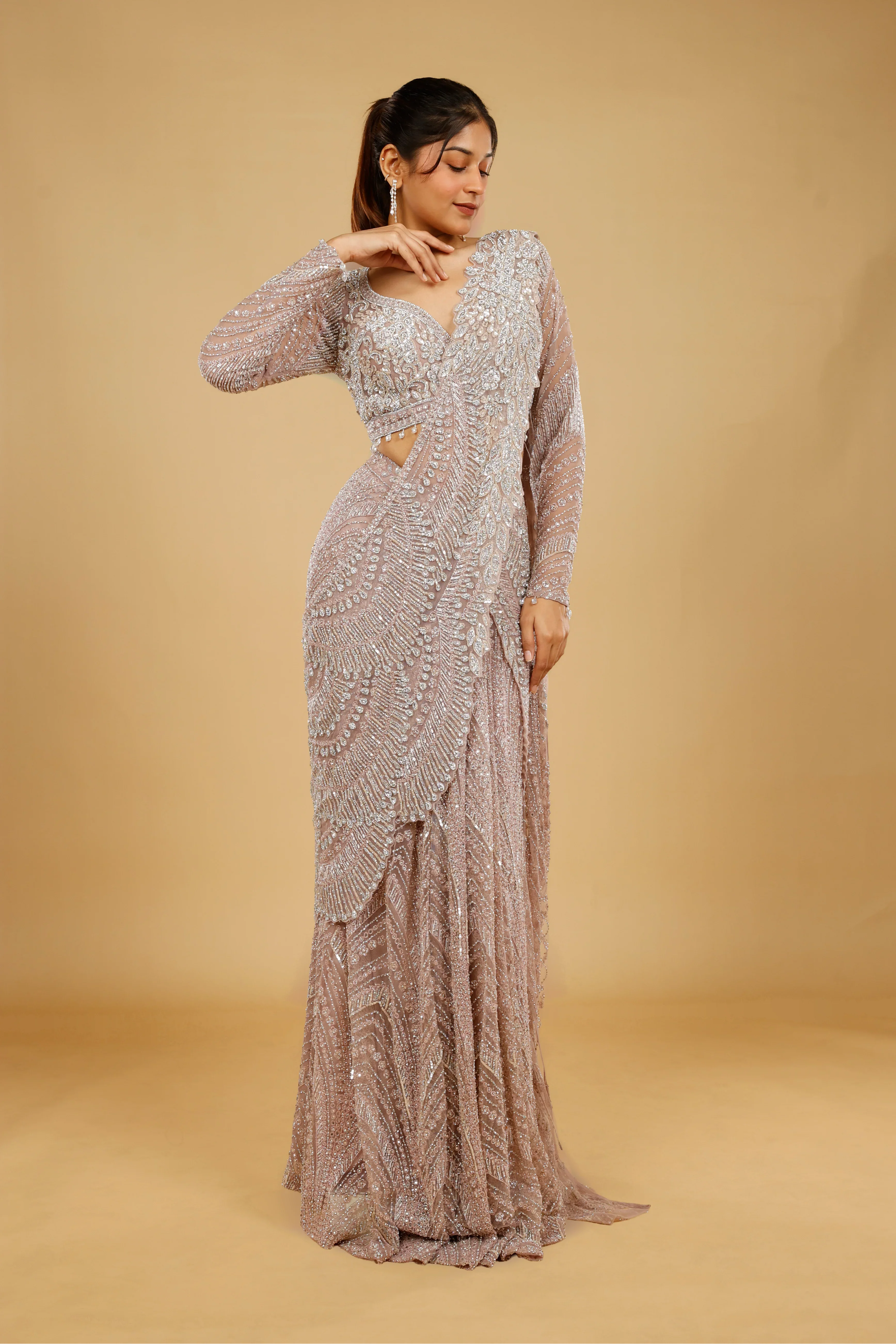
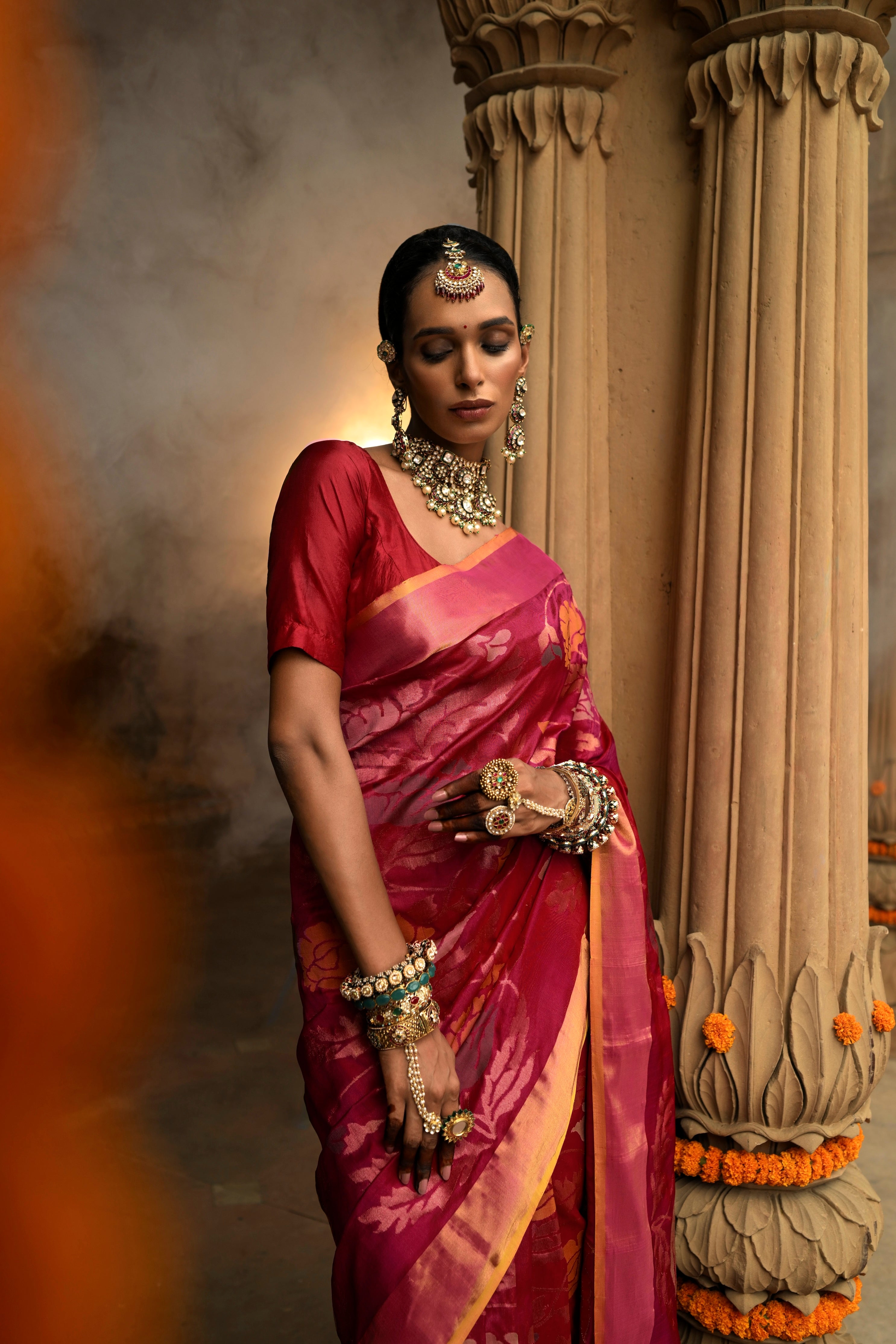
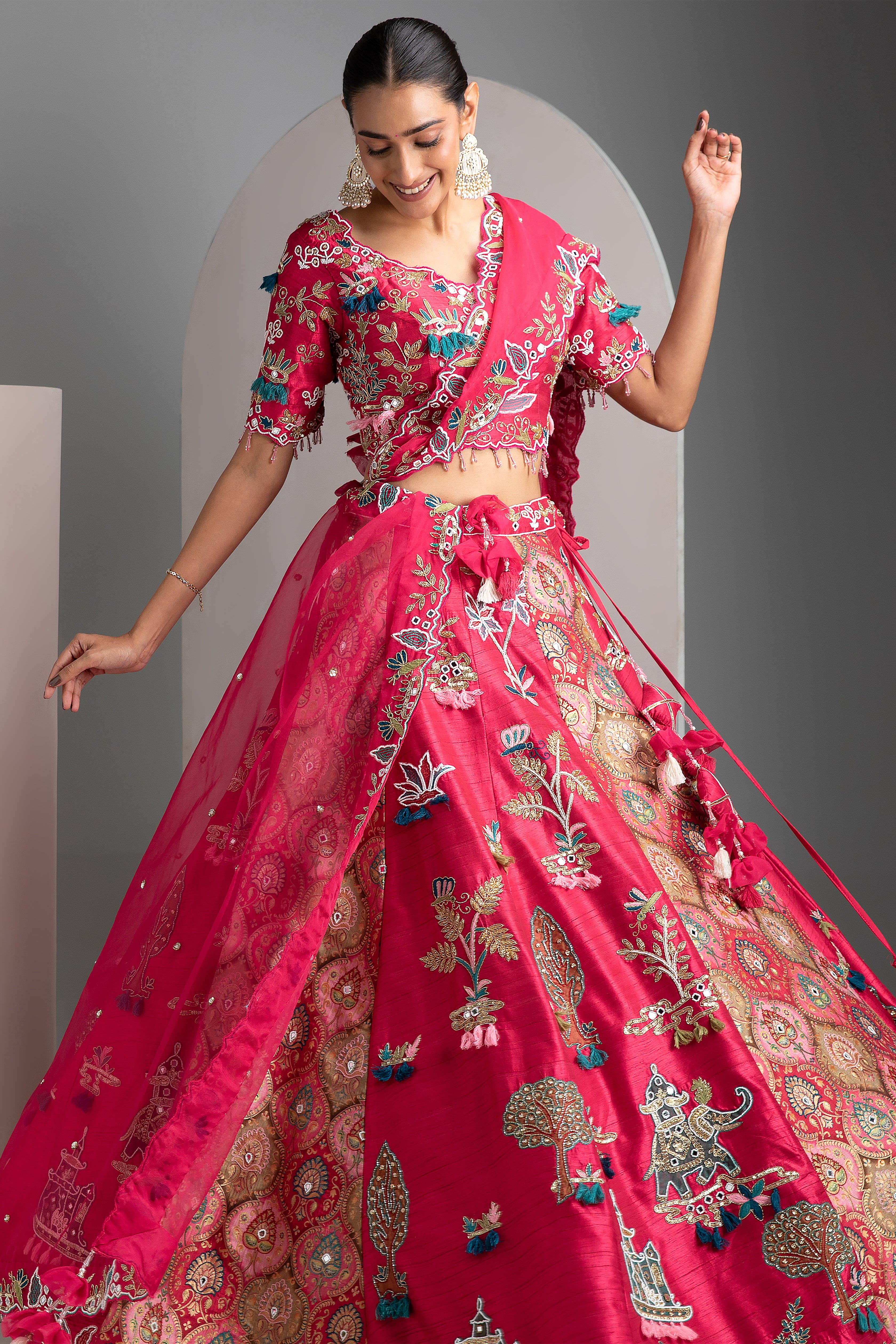
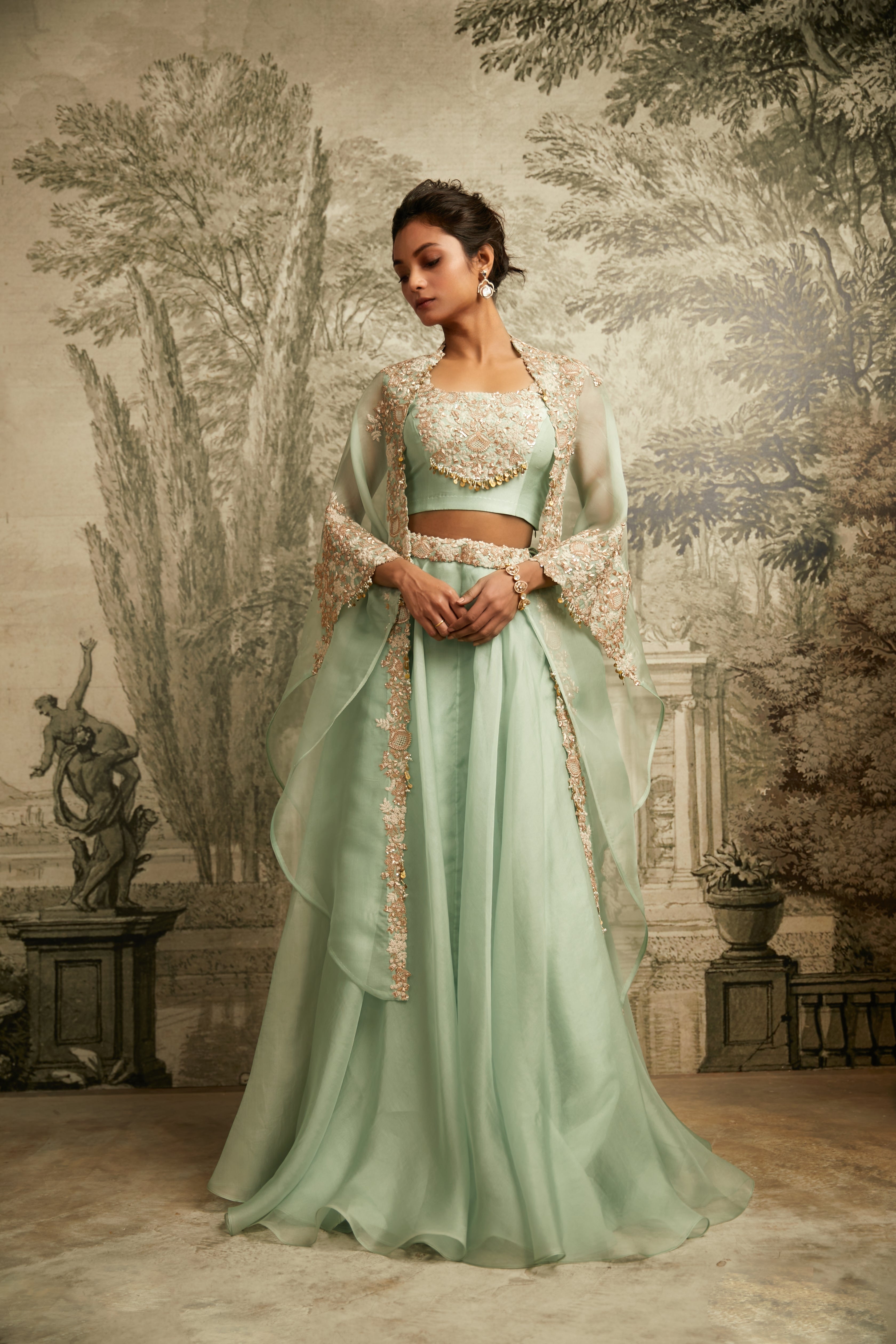

Kanjivaram silk sarees originate from Kanchipuram, Tamil Nadu, and are woven with pure mulberry silk and real zari using a distinctive interlocking border technique. Banarasi silk sarees come from Varanasi, Uttar Pradesh, and are defined by intricate Mughal-inspired brocade work woven with gold and silver threads. Kanjivaram is heavier, stiffer, and more structured; Banarasi is lighter, more ornate in pattern, and drapes with greater fluidity.
Both are among the finest silk sarees in India — but they are very different in feel, occasion-fit, and aesthetic. This guide tells you exactly how to choose between them.

At a Glance: Kanjivaram vs Banarasi
| Feature | Kanjivaram | Banarasi |
|---|---|---|
| Origin | Kanchipuram, Tamil Nadu | Varanasi, Uttar Pradesh |
| Base fabric | Pure mulberry silk | Silk (Katan, Organza, Georgette) |
| Weaving technique | Korvai — body and border woven separately, then interlocked | Brocade — gold/silver threads woven into the fabric |
| Weight | Heavy (800g–1.2kg typically) | Lighter (400g–800g) |
| Drape | Stiff, structured, holds its shape | Fluid, flowing, drapes softly |
| Motifs | Temple gopuram, peacock, swan, checks, stripes | Floral butis, jaal (net), kalma, asharfi (coin), meenakari |
| Zari | Real gold/silver zari in authentic pieces | Gold and silver brocade threads |
| Colour range | Rich jewel tones — red, green, maroon, purple | Broader range — jewel tones, pastels, neutrals |
| Price range | ₹8,000–₹2,00,000+ | ₹3,000–₹5,00,000+ |
| Best for | South Indian weddings, temple occasions | North Indian weddings, receptions, bridal, festive |
| GI Tag | Yes | Yes |
| Durability | Extremely durable — can last generations | Durable but lighter variants (organza/georgette) less so |
What Is a Kanjivaram Silk Saree?
A Kanjivaram saree (also called Kanchipuram silk) is woven in the temple town of Kanchipuram, Tamil Nadu, by weavers from the Devangar and Mudaliar communities who have practised the craft for over 400 years. It holds a Geographical Indication (GI) tag, meaning only sarees woven in Kanchipuram can be officially called Kanjivaram.
What makes it distinctive:
The defining characteristic of a Kanjivaram is the korvai technique — the body and border of the saree are woven separately on the loom and then interlocked together. This is why the border on a genuine Kanjivaram has a visible join line when you hold it up to the light, and why the border colour can differ entirely from the body.
Key characteristics:
- Pure mulberry silk — heavier and more lustrous than other silk varieties
- Real zari made from gold or silver wire in authentic pieces
- Temple motifs: gopuram towers, peacock (mayil), swan (annam), lotus, rudraksha
- Geometric patterns: checks (kattam), stripes (vari), diagonal patterns
- Rich, saturated jewel tones — red, green, purple, royal blue, maroon
Typical weight: 800g–1.2kg. The heaviness is a quality indicator in Kanjivaram — it reflects the density of silk and the amount of real zari used.

What Is a Banarasi Silk Saree?
A Banarasi saree is woven in Varanasi (historically called Banaras), Uttar Pradesh, by Muslim weavers who have been practising the craft since the Mughal period. It also holds a GI tag. Banarasi silk is globally recognised for its brocade weaving — gold and silver threads interwoven into the silk fabric to create raised, textured patterns.
What makes it distinctive:
Banarasi sarees are defined by their brocade work — also called zari work — where metallic threads are woven into the silk rather than added after weaving. The patterns draw heavily from Mughal art: Persian florals, intricate jaal (all-over net patterns), vine work, and coin motifs.
Types of Banarasi sarees:
| Type | Base Fabric | Weight | Best For |
|---|---|---|---|
| Katan | Pure silk | Heavy | Bridal, formal weddings |
| Kora (Organza) | Stiff organza + silk | Medium | Receptions, festive |
| Georgette | Sheer georgette + silk | Light | Evening parties, cocktail |
| Shattir | Mix fabric | Medium | Casual festive |
This variety means Banarasi has a wider price and occasion range than Kanjivaram.

Kanjivaram vs Banarasi: Weave and Craftsmanship
| Aspect | Kanjivaram | Banarasi |
|---|---|---|
| Loom type | Pit loom | Throw-shuttle loom |
| Weaving time | 1–5 days for simple; weeks for complex | Days to months depending on complexity |
| Zari integration | Zari woven into border and pallu separately | Zari woven throughout body, border, and pallu |
| Pattern technique | Interlocked weave (korvai) | Brocade (jamdani, meenakari, tanchoi) |
| Border attachment | Physically interlocked — not stitched | Woven as one continuous piece |
The korvai border of Kanjivaram is one of the most technically demanding weaving techniques in Indian textiles. The jaal brocade of Banarasi — where metallic thread creates an all-over net pattern — can take months of work on complex pieces.
How to Identify an Authentic Kanjivaram
Counterfeit Kanjivaram sarees (often made from art silk or synthetic zari) are common. Here's how to verify:
1. The burn test
Pull out a small thread from an inconspicuous edge. Burn it. Pure silk burns like hair — it smells of burnt protein and leaves a crushable ash. Synthetic fibres melt, bead, and smell of plastic.
2. The border interlocking test
Hold the saree up to light at the border join. A genuine Kanjivaram will show a visible interlocking line where the body and border meet. A fake has a continuous weave or stitched border.
3. The zari rub test
Rub the zari against a white cloth. Real zari leaves no colour. Fake zari (copper coated in gold paint) leaves a golden residue.
4. Silk Mark certification
The Silk Mark is India's official quality assurance for pure silk. Mokshaa is Silk Mark certified — every pure silk saree in our collection carries the tag. Look for it when purchasing from any retailer.
5. Weight
A genuine Kanjivaram with real zari feels noticeably heavy. If a saree is marketed as pure Kanjivaram but feels light, it likely isn't.
How to Identify an Authentic Banarasi
1. The zari check
Real Banarasi gold zari has a warm, slightly muted gold tone — not bright yellow or plastic-looking. Run your finger across the brocade: real zari feels slightly raised and has texture. Machine-printed designs are flat.
2. Look at the reverse
In a genuine handwoven Banarasi, the reverse side shows floating threads where the zari passes between motifs. A machine-made saree has a clean, thread-free reverse.
3. GI tag label
Authentic Banarasi sarees sold by certified weavers carry a GI tag. Ask for it.
4. Motif precision
Handwoven Banarasi motifs have very slight irregularities — each buti (motif) is marginally unique. Machine-made patterns are perfectly identical across the saree.
Kanjivaram vs Banarasi: Which Is Right for Your Occasion?
| Occasion | Better Choice | Why |
|---|---|---|
| South Indian wedding (bride) | Kanjivaram | Traditional, culturally significant, holds embroidery for rituals |
| North Indian wedding (bride) | Banarasi (Katan) | Bridal tradition, rich brocade associated with North Indian weddings |
| Reception | Either | Banarasi for fluidity; Kanjivaram for grandeur |
| Temple visit / religious ceremony | Kanjivaram | Temple motifs, heavy silk — traditional for devotional occasions |
| Festive occasion (Diwali, Eid, Pongal) | Either | Kanjivaram for formality; Banarasi Kora/Georgette for lighter festive feel |
| Cocktail party / evening event | Banarasi Georgette | Lighter Banarasi variants are more appropriate for modern evening wear |
| Gift / heirloom investment | Kanjivaram | Denser silk, real zari — holds value and lasts generations |
| First silk saree purchase | Banarasi | Easier to drape (lighter), wider price range for entry |
Price Comparison: What to Expect
| Tier | Kanjivaram | Banarasi |
|---|---|---|
| Entry level | ₹8,000–₹15,000 | ₹3,000–₹8,000 |
| Mid range | ₹15,000–₹50,000 | ₹8,000–₹30,000 |
| Premium | ₹50,000–₹1,00,000 | ₹30,000–₹1,00,000 |
| Heirloom / collector | ₹1,00,000–₹2,00,000+ | ₹1,00,000–₹5,00,000+ |
Why Kanjivaram starts higher: The minimum weight of real mulberry silk and real zari required for a genuine Kanjivaram sets a natural price floor. Very cheap "Kanjivaram" sarees are almost certainly not the real thing.
Why Banarasi has a wider range: Banarasi comes in multiple base fabrics — organza and georgette variants start lower, while pure Katan silk with dense brocade commands the highest prices.
Care and Storage
| Care Aspect | Kanjivaram | Banarasi |
|---|---|---|
| Washing | Dry clean only | Dry clean only |
| Storing | Fold in soft muslin or tissue paper; avoid plastic | Fold in muslin; store flat to protect brocade |
| Airing | Air every 3–6 months | Air every 3–6 months |
| Zari protection | Avoid moisture; tarnishes with humidity | Same |
| Folding | Refold on different creases each time to prevent wear lines | Same |
Never: Store in plastic bags (traps moisture and damages zari), hang on hangers (weight stretches the silk), or expose to direct sunlight for prolonged periods.
The Verdict: Kanjivaram or Banarasi?
Choose Kanjivaram if:
- You're buying for a South Indian wedding or ritual occasion
- You want a saree to be an heirloom — worn by you, and passed down
- You prefer bold, geometric, temple-inspired aesthetics
- You want maximum presence and structure in your drape
Choose Banarasi if:
- You're buying for a North Indian wedding, reception, or festive event
- You want more drape and fluidity in how the saree moves
- You prefer Mughal-inspired floral and ornate patterns
- You want a lighter saree — or a more versatile occasion range via Kora or Georgette variants
- You're buying your first silk saree and want an easier starting point
If you can only own one: Kanjivaram holds more long-term value and is more versatile across regional Indian occasions. Banarasi is more wearable day-to-day and has more styling range across events.
Frequently Asked Questions
Which is more expensive — Kanjivaram or Banarasi?
Both can be equally expensive at the premium end. Kanjivaram generally starts at a higher price floor (around ₹8,000–₹10,000 for genuine pure silk) because of the density of mulberry silk and real zari required. Banarasi has a wider price range — lighter variants in organza or georgette start lower, while pure Katan Banarasi with dense brocade work can exceed ₹5,00,000.
Can I wear a Kanjivaram saree to a North Indian wedding?
Yes, absolutely. A Kanjivaram is considered one of the finest sarees in India and is respected and admired across all regions. It is particularly striking at formal North Indian weddings and receptions. You may choose jewel tones and a heavier pallu design to match the grandeur of North Indian wedding aesthetics.
How do I know if a Kanjivaram silk saree is genuine?
Check for: (1) a visible interlocking join line between the body and border when held to light, (2) the Silk Mark certification tag, (3) heavy weight from real mulberry silk and zari, and (4) the burn test — pure silk burns like hair and leaves crushable ash, not plastic beads.
Is Banarasi silk good for a bride?
Yes. Pure Katan Banarasi is a traditional bridal choice, particularly in North Indian weddings. It is rich, ornate, and carries deep cultural significance. For brides who want fluidity rather than structure, a Banarasi drapes more softly than a Kanjivaram and moves beautifully throughout long ceremony days.
Which silk saree lasts longer — Kanjivaram or Banarasi?
Kanjivaram typically lasts longer due to its denser mulberry silk weave and heavier construction. Authentic Kanjivaram sarees are known to be passed down through generations. Banarasi sarees are also durable, but lighter variants (organza, georgette) are more delicate and require more careful handling.
What is the difference between Kanjivaram and Kanchipuram silk?
They are the same saree. Kanjivaram is the colloquial name; Kanchipuram is the formal name of the town in Tamil Nadu where they are woven. Both names refer to the same GI-tagged silk saree tradition.
Explore Mokshaa's collection of pure silk sarees, Kanjivaram sarees, and bridal sarees — all Silk Mark certified, with worldwide shipping and cash on delivery across India.