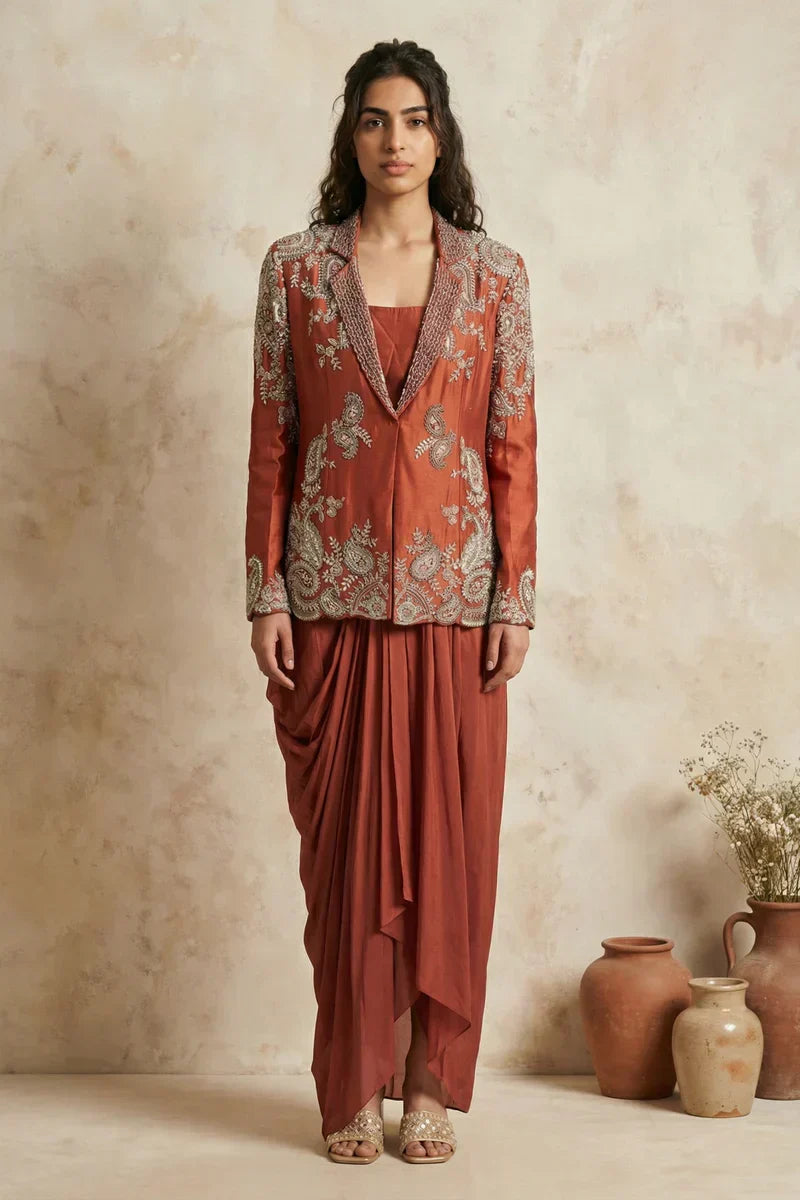
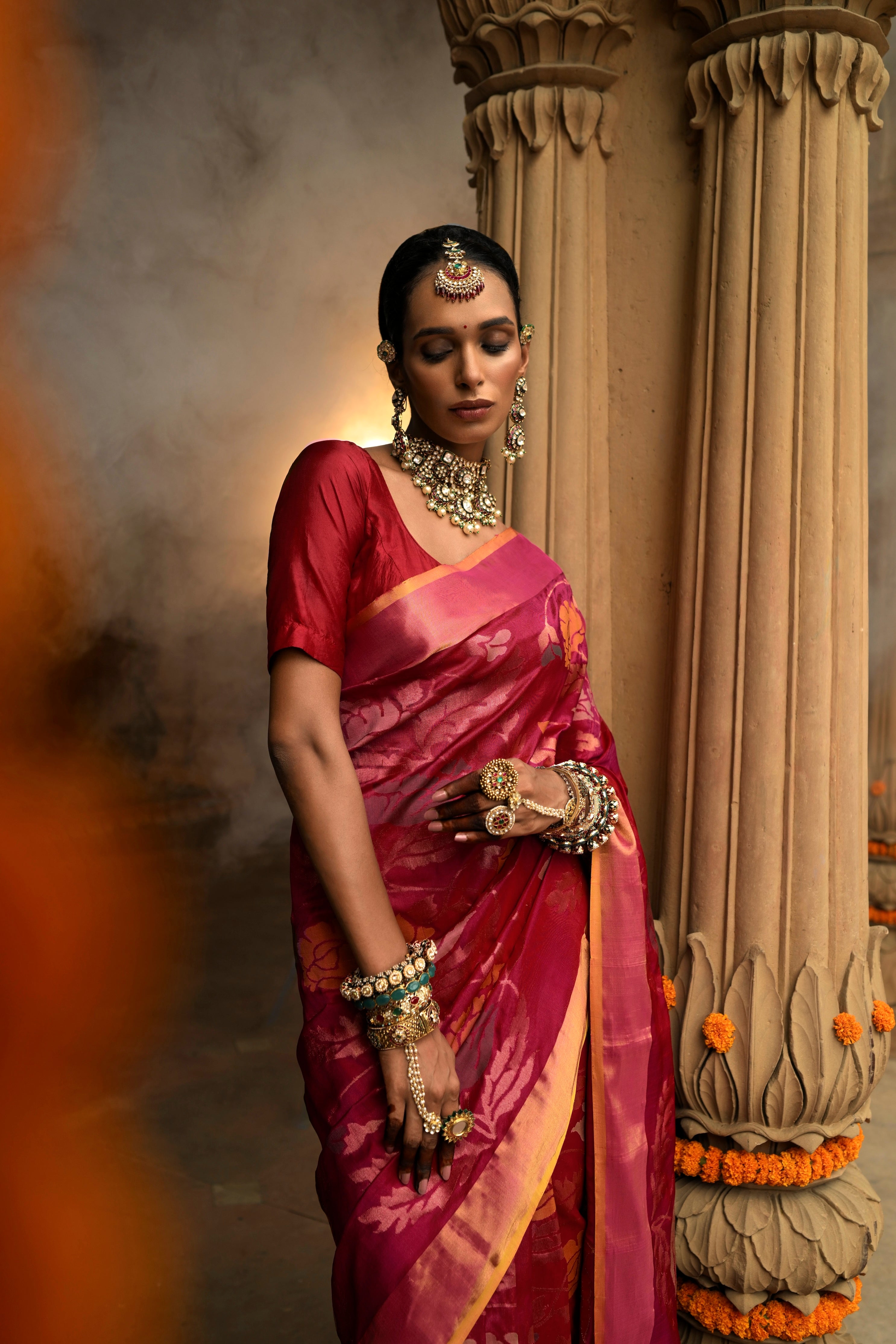
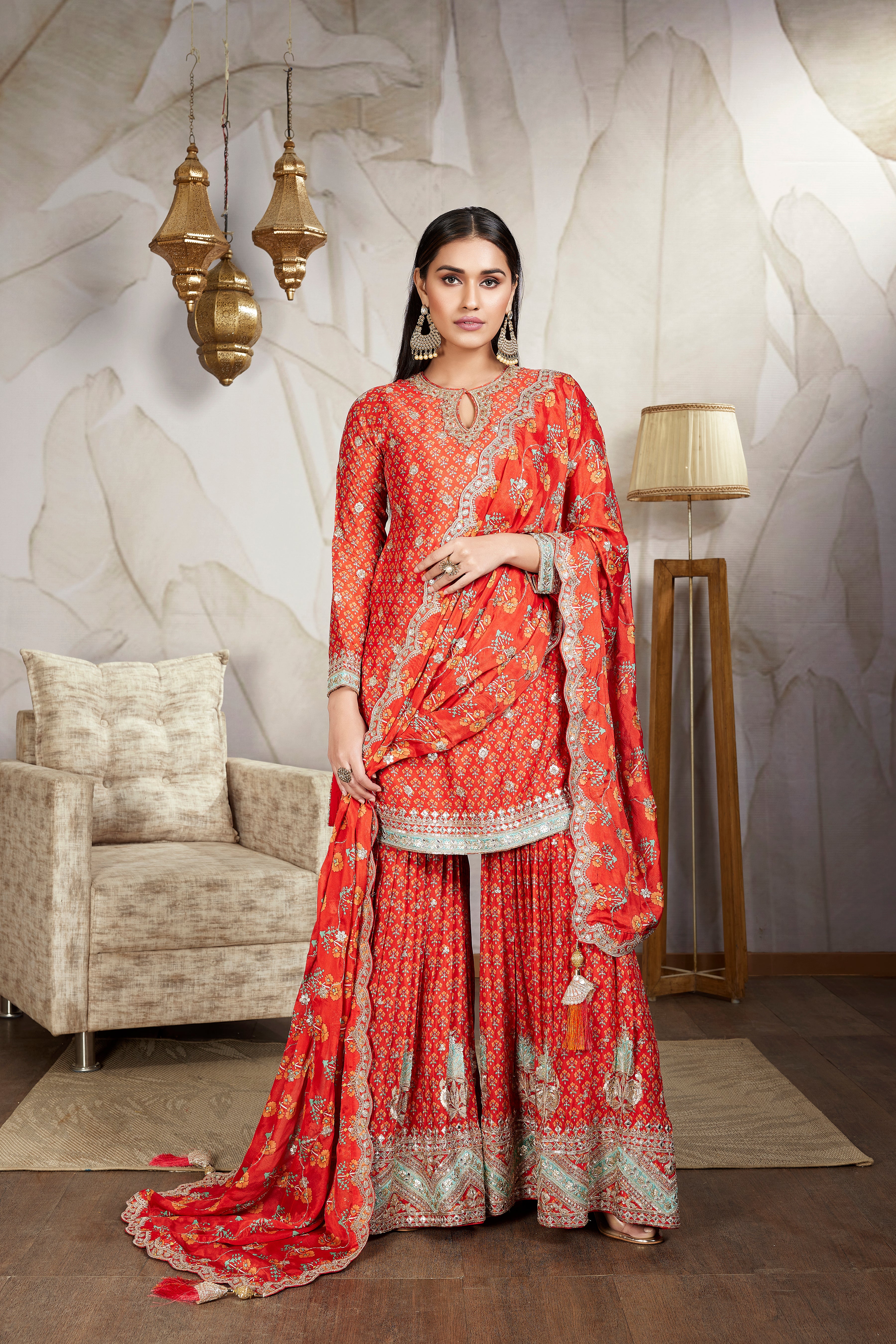
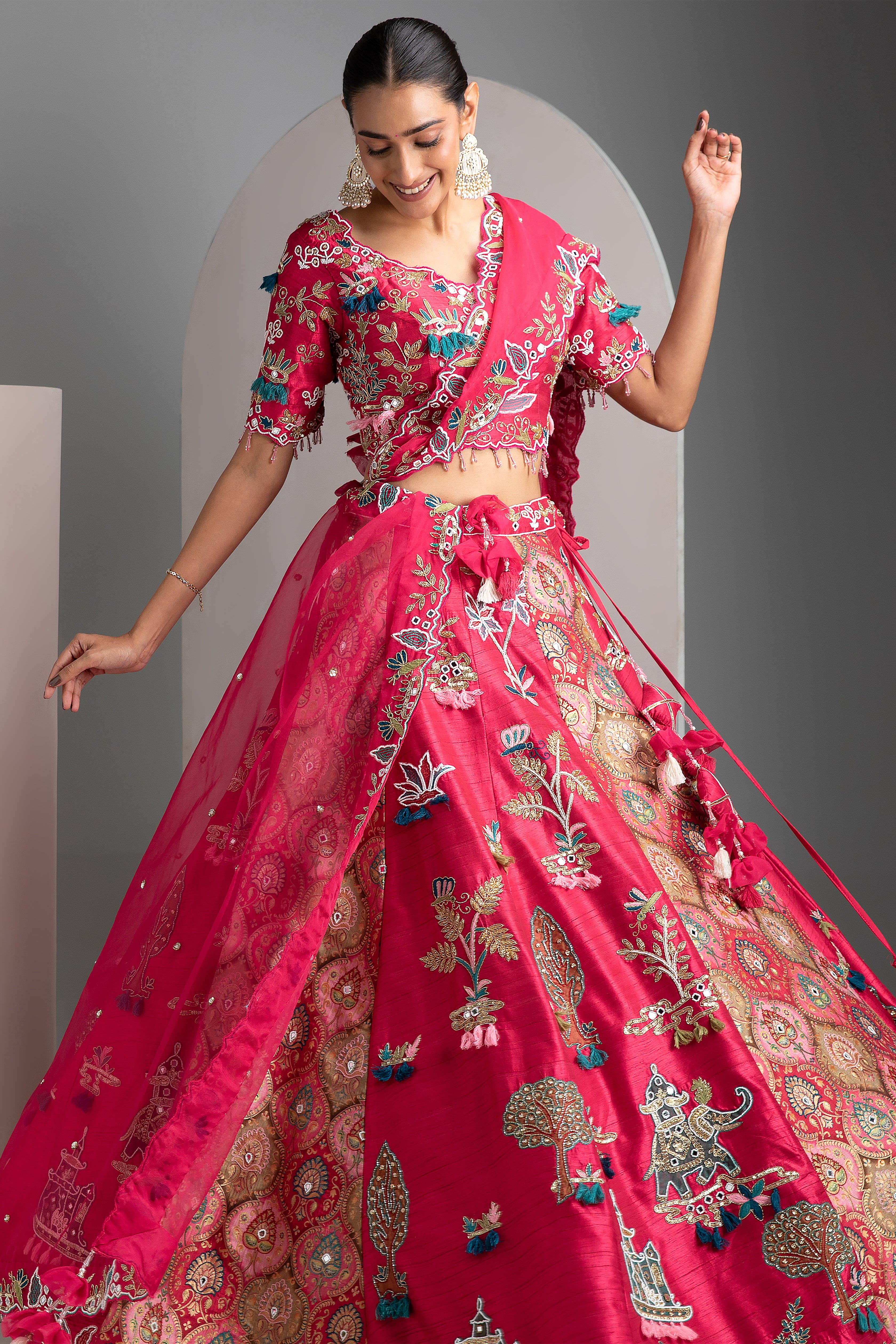

Is Heavy Embroidery Always Better for Weddings? A Stylist’s Perspective
When it comes to wedding shopping, one belief dominates almost every bridal conversation:
“The heavier the embroidery, the better the outfit.”
Brides, mothers, and even bridesmaids often assume that weight equals value, richness, and bridal impact. But after styling hundreds of weddings across different cultures, venues, body types, and functions, we can confidently say:
✨ Heavy embroidery is not always better — and in many cases, it works against the bride.
At Mokshaa, our stylists evaluate embroidery not by how dense it is, but by how intelligently it is placed, balanced, and styled.
This blog breaks down the truth behind heavy embroidery, when it truly works, when it doesn’t, and how to make the right choice for your wedding.
Why Heavy Embroidery Became the “Gold Standard”
Traditionally, heavy embroidery symbolised:
-
Celebration and prosperity
-
Craftsmanship and labour
-
Wedding importance
In royal and heritage weddings, heavily embroidered garments were a marker of status — and that association has carried forward into modern bridal wear.
However, weddings today are very different:
-
Longer events
-
More movement
-
Photography-driven
-
Multiple outfit changes
-
Global venues and climates
What once worked for static ceremonies doesn’t always suit today’s weddings.
What Heavy Embroidery Actually Does (Stylist Reality Check)
Heavy embroidery impacts four critical areas:
1. Weight & Comfort
Dense embroidery adds:
-
Physical weight
-
Pressure on shoulders and waist
-
Fatigue over long hours
Many brides tell us:
“I loved it in the trial, but I felt exhausted during the ceremony.”
2. Drape & Movement
Heavy work can:
-
Stiffen the outfit
-
Prevent natural fall
-
Restrict walking and sitting
This is especially noticeable in lehengas and sarees with thick borders or fully encrusted panels.
3. Body Proportions
Embroidery placed without thought can:
-
Add bulk to the waist or hips
-
Shorten the torso visually
-
Disrupt natural body balance
The issue isn’t embroidery — it’s placement.
4. Photography Outcome
Ironically, extremely heavy embroidery can:
-
Lose detail in photos
-
Appear flat under certain lighting
-
Overpower facial features
Subtle work often photographs more luxuriously than dense, all-over embellishment.
When Heavy Embroidery Does Work Beautifully
Heavy embroidery is powerful when used intentionally.
✔ It Works Best When:
-
The event is short (reception entry, stage ceremony)
-
The outfit is worn for limited hours
-
The silhouette is well-structured
-
The bride is comfortable carrying weight
-
The embroidery follows vertical or panelled lines
✔ Ideal Occasions:
-
Reception lehengas
-
Sangeet or cocktail outfits
-
Winter weddings (heavier fabrics help)
In these cases, heavy embroidery adds drama and grandeur — exactly where it’s needed.
When Lighter Embroidery Is the Better Choice
For many core wedding moments, lighter work actually performs better.
✔ Best for:
-
Muhurtham / temple weddings
-
Day weddings
-
Destination weddings
-
Long rituals
-
Outdoor ceremonies
Light embroidery allows:
-
Better movement
-
Cleaner drape
-
Easier posture
-
More comfort
And importantly — more confidence.

The Secret Stylists Use: Embroidery Density vs Placement
This is where expert styling makes all the difference.
High-Impact, Low-Weight Embroidery Techniques
-
Vertical motif placement
-
Border-focused embroidery instead of all-over
-
Ombre or gradient work
-
Strategic blouse-heavy + skirt-light balance
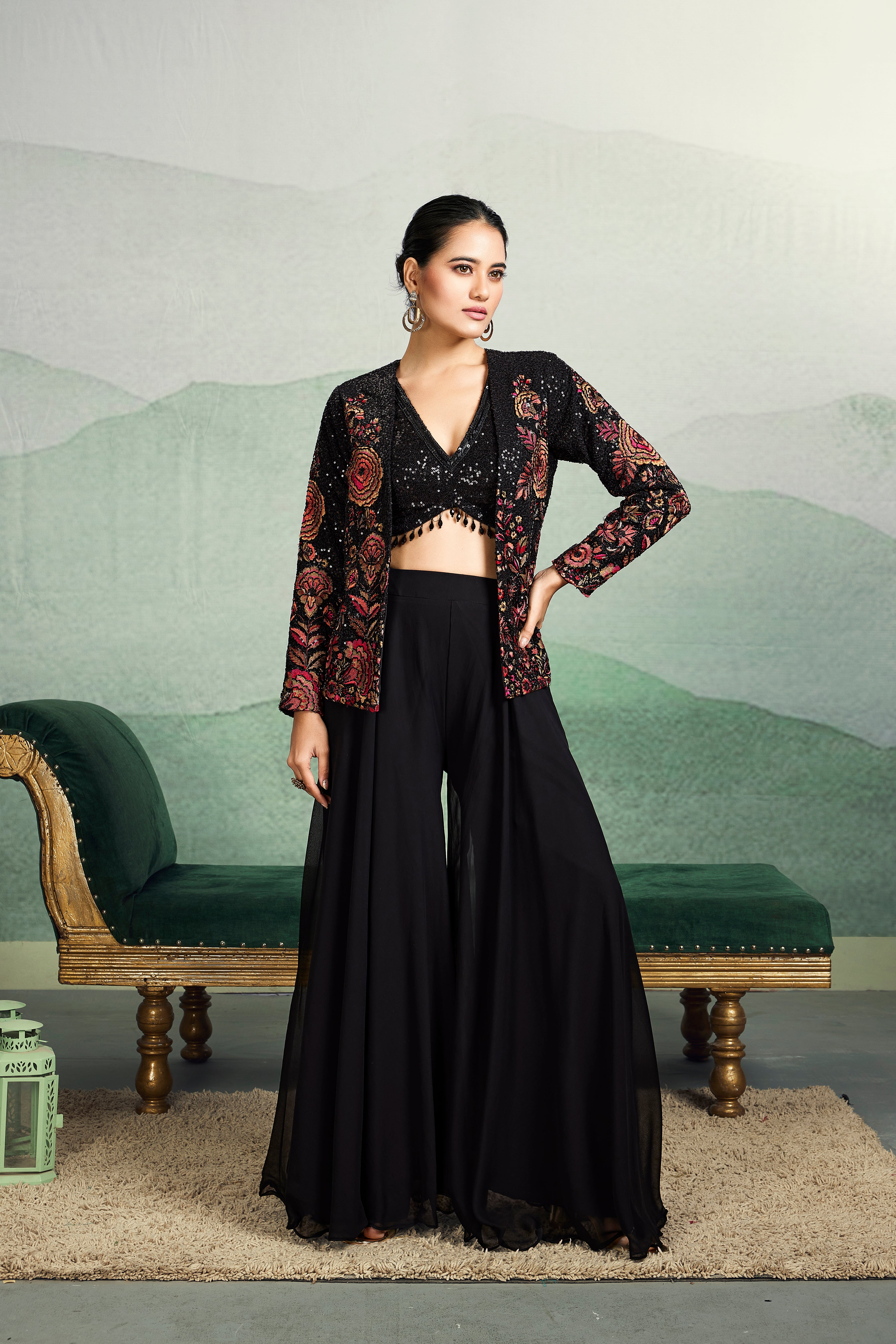
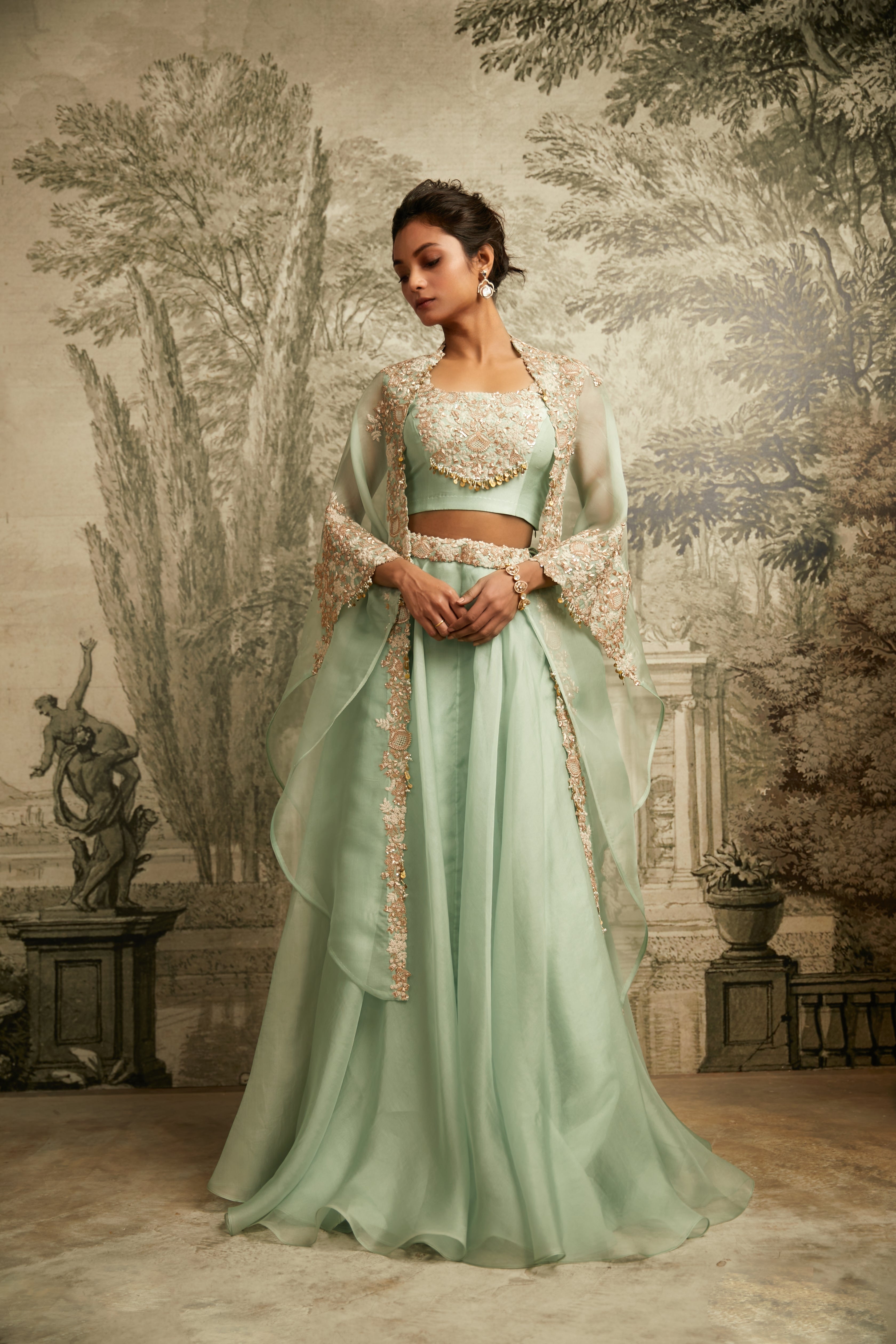
A lehenga with heavy embroidery only on the blouse and border often looks richer than one fully covered in work.

Fabric + Embroidery: The Most Overlooked Equation
Embroidery never exists alone — fabric matters.
Heavy Embroidery Works Best On:
These fabrics support embellishment without collapsing.
Lighter Embroidery Works Best On:
-
Georgette
-
Soft silk
-
Tissue silk
On these fabrics, heavy work can drag the drape down.
Modern Luxury Is Shifting Away from Excess
One of the biggest shifts we see in modern bridal styling is this:
✨ Luxury today is about refinement, not overload.
Brides are choosing:
-
Thoughtful detailing over dense work
-
Craftsmanship over clutter
-
Balance over bulk
A well-cut silhouette with intelligent embroidery often looks far more expensive than a heavily encrusted outfit.
Real Stylist Insight from Mokshaa
One of the most common regrets brides share after the wedding is:
“I wish I had chosen something lighter.”
Rarely do we hear:
“I wish it was heavier.”
That insight alone speaks volumes.
When brides are comfortable, they:
-
Smile naturally
-
Stand confidently
-
Move gracefully
-
Enjoy the moment
And that shows in every photograph.
How to Decide: Ask Yourself These Questions
Before choosing heavy embroidery, ask:
-
How long will I wear this outfit?
-
Will I need to sit, walk, or stand a lot?
-
Is the embroidery placed thoughtfully?
-
Does the outfit still look elegant from a distance?
-
Do I feel energised or weighed down?
If comfort drops, elegance follows.
Mokshaa Stylist Verdict
Heavy embroidery is not a requirement for a beautiful wedding look.
It is a styling choice — one that must align with:
-
The function
-
The fabric
-
The bride’s body type
-
The duration of wear
-
The overall aesthetic
Some weddings need drama.
Some moments need softness.
True bridal elegance lies in knowing the difference.
Final Thoughts
So, is heavy embroidery always better for weddings?
No.
Sometimes it’s perfect.
Sometimes it’s unnecessary.
And sometimes, it takes away more than it adds.
The best wedding outfit is not the heaviest one —
it’s the one that lets you feel confident, comfortable, and completely yourself.
At Mokshaa, we style for real weddings, real bodies, and real moments — not just mirrors.
Because when styling is right, you don’t need excess to stand out.