
Are Lehengas Suitable for All Body Types? A Bridal Styling Expert Answers
One of the most common questions brides and wedding guests ask is:
“Are lehengas suitable for all body types?”
The short answer?
✨ Yes — when chosen and tailored correctly.
The long answer is more nuanced — and far more empowering.
At Mokshaa, after styling brides across petite, curvy, tall, plus-size, athletic, and pear-shaped frames, we can confidently say:
A lehenga doesn’t need the “perfect body.”
It needs the right silhouette, fabric, and construction.
This guide breaks down exactly how lehengas can flatter every body type — and what makes the difference between overwhelming and extraordinary.

Why Lehengas Work So Well Across Body Types
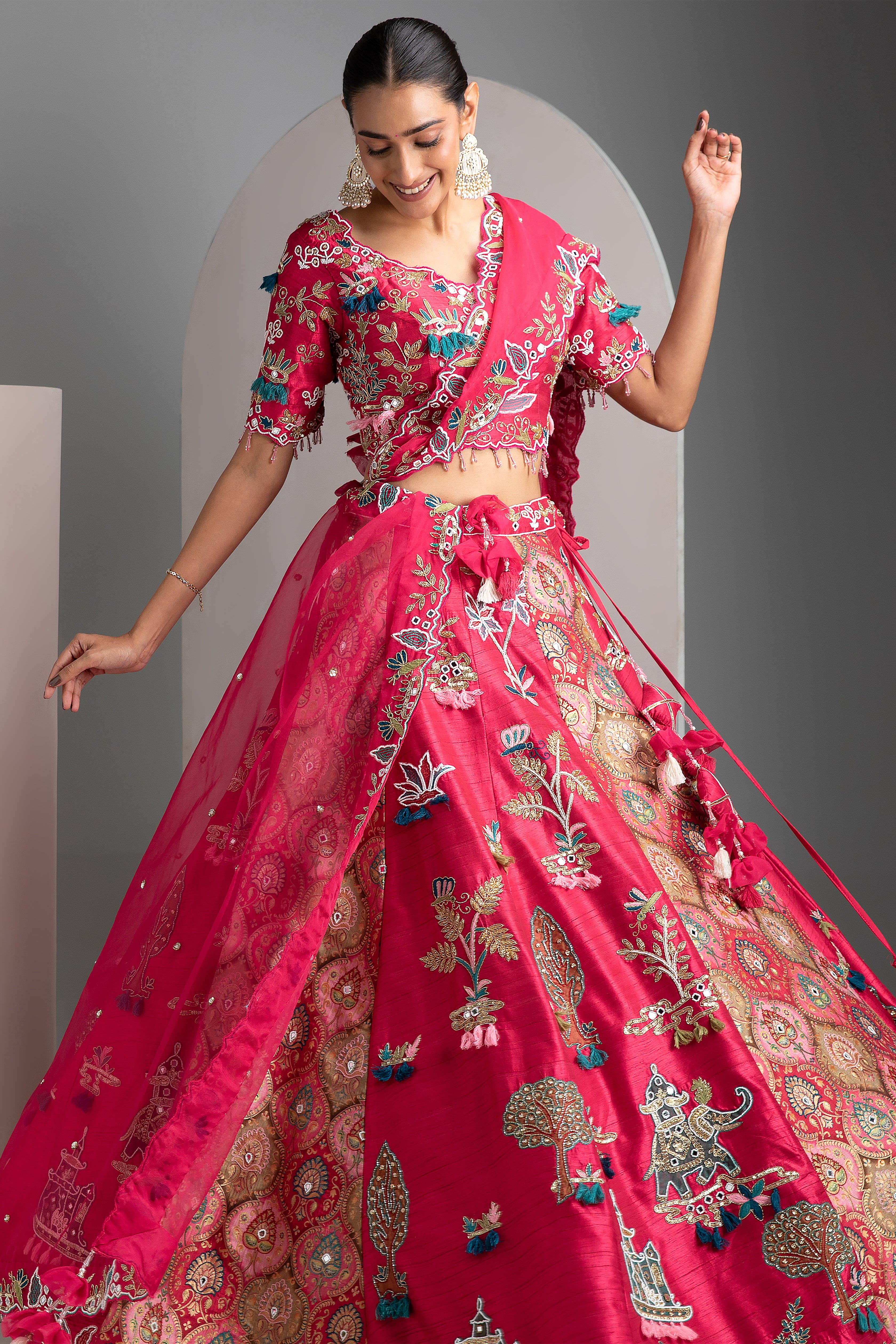
Unlike many one-piece garments, lehengas are structured in three parts:
-
Skirt
-
Blouse
-
Dupatta
This separation allows for custom proportion balancing, making lehengas one of the most adaptable silhouettes in ethnic wear.
You can:
-
Raise or lower the waistline
-
Adjust flare
-
Modify blouse structure
-
Style the dupatta strategically
That flexibility is why lehengas are not restrictive — they are customizable.
Body Type Breakdown: What Works Best
1. Petite Frames (Short Height)
Concern: “Will the lehenga make me look shorter?”
What Works:
✔ High-waisted lehengas
✔ Smaller, controlled flare
✔ Vertical embroidery
✔ V-neck or sweetheart blouse
What to Avoid:
✖ Excessively wide circular flares
✖ Heavy horizontal borders
✖ Very long cholis that cut height
Stylist Insight:
When tailored properly, lehengas actually elongate petite brides more effectively than sarees in many cases.
2. Pear-Shaped (Wider Hips)
Concern: “Will the skirt add too much volume?”
What Works:
✔ A-line or panelled lehengas
✔ Structured blouses to balance the upper body
✔ Dupatta draped diagonally
What to Avoid:
✖ Extremely gathered waistlines
✖ Heavy embroidery only at hip level
Lehengas distribute weight visually — making them incredibly flattering for pear-shaped bodies.
3. Apple-Shaped (Fuller Midsection)
Concern: “Will the waist area look bulky?”
What Works:
✔ High-waist lehengas
✔ Structured blouses with boning
✔ Vertical motif placement
✔ Slight flare starting below waist
What to Avoid:
✖ Tight waistbands without structure
✖ Excessively stiff fabrics
A properly structured blouse changes everything — it defines the torso and improves posture instantly.
4. Hourglass Frames
Concern: None — but balance matters.
What Works:
✔ Fitted blouses
✔ Balanced flare
✔ Defined waistlines
Lehengas naturally enhance hourglass proportions beautifully.
5. Tall & Lean Frames
Concern: “Will I look too long or flat?”
What Works:
✔ Larger flares
✔ Layered dupattas
✔ Heavier embroidery
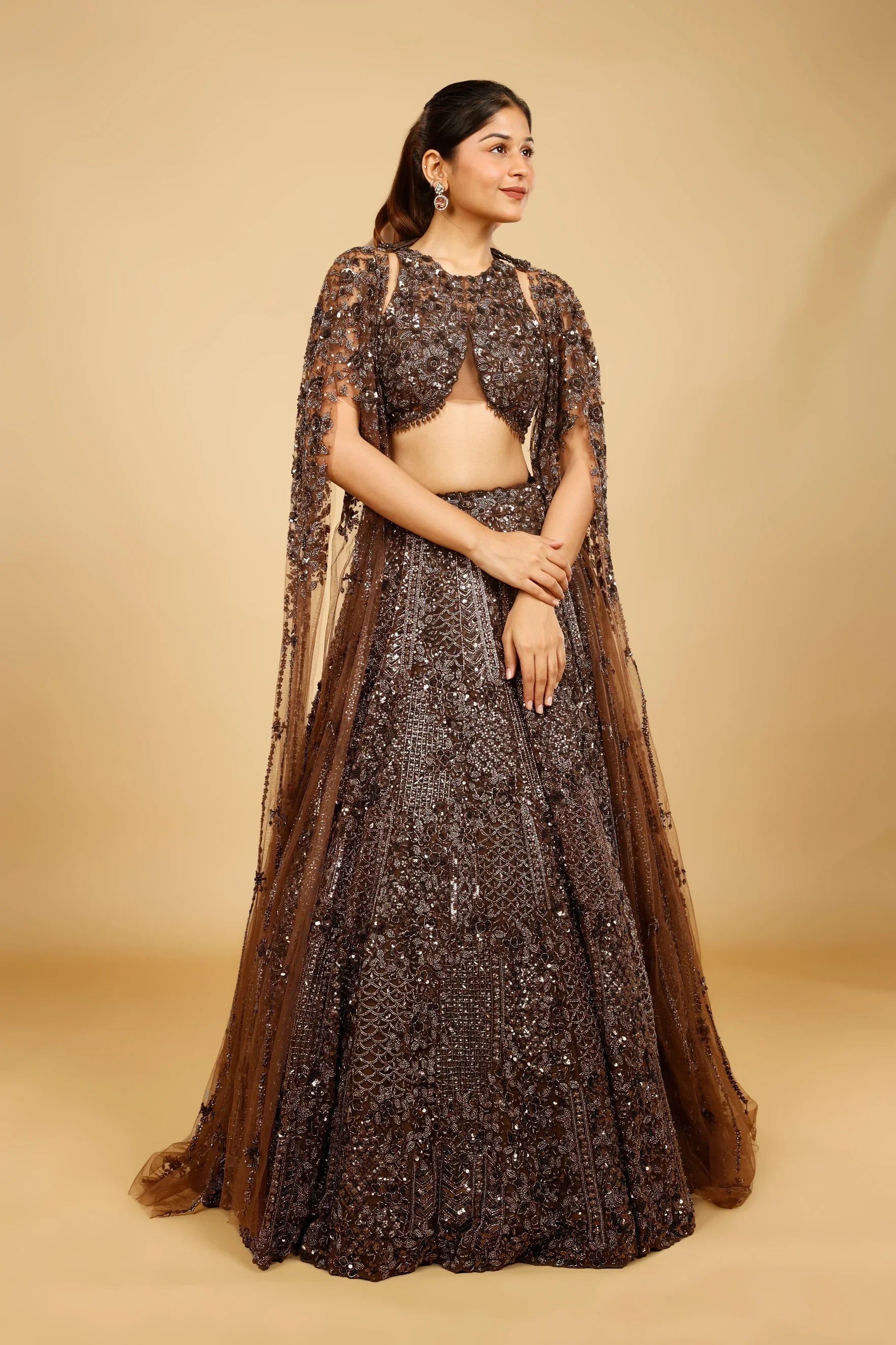
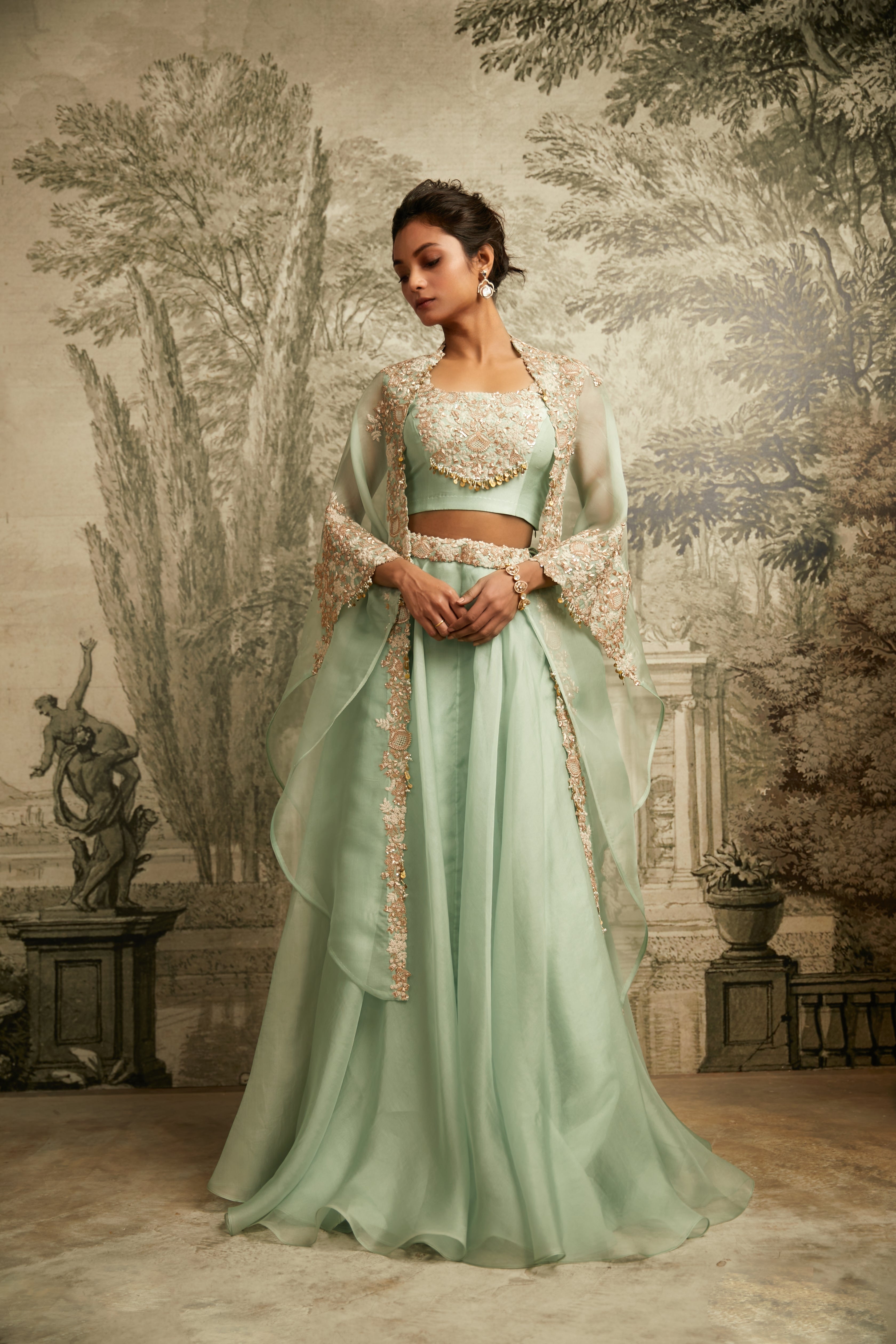
✔ Cape-style styling
Tall brides can carry dramatic volume effortlessly.
6. Plus-Size Brides
Concern: “Will I look bulky?”
This is the most common — and most misplaced — fear.
What Works:
✔ Panelled A-line lehengas
✔ Organza, soft net, or georgette fabrics
✔ Structured blouse support
✔ Strategic embroidery placement
What to Avoid:
✖ Thick can-can layers
✖ Stiff brocade without tailoring
✖ Overly bulky underskirts
At Mokshaa, some of the most regal bridal looks we’ve styled have been for plus-size brides — because lehengas celebrate curves when proportioned well.

The 3 Elements That Actually Matter (More Than Body Type)
Here’s what truly determines whether a lehenga flatters you:
1. Proportion
The relationship between:
-
Blouse length
-
Waist height
-
Skirt flare
-
Dupatta placement
Proportion can visually:
-
Add height
-
Create curves
-
Slim the torso
-
Balance shoulders
2. Fabric Choice
Fabric determines how the lehenga falls.
Lightweight & Flowing:
-
Georgette
-
Organza
-
Soft net
Structured & Regal:
Heavy fabrics without tailoring can overwhelm.
Light fabrics without structure can look flat.
Balance is key.
3. Construction & Tailoring
The difference between:
-
“This doesn’t suit me”
and -
“This looks made for me”
…is almost always tailoring.
Lehengas must:
-
Sit correctly on the waist
-
Have supportive blouse construction
-
Maintain flare without stiffness
Fit matters more than size.
Common Mistakes Brides Make
❌ Choosing trends over proportions
❌ Ignoring blouse structure
❌ Focusing only on embroidery
❌ Avoiding lehengas out of fear
The lehenga isn’t the issue — improper styling is.
Can Lehengas Truly Suit All Body Types?
Yes — with intelligent styling.
The lehenga is not a rigid garment.
It is one of the most adaptable bridal silhouettes available.
When tailored properly:
-
Petite brides look elongated
-
Curvy brides look balanced
-
Tall brides look statuesque
-
Plus-size brides look regal
Lehengas are not about hiding the body — they are about celebrating it.

Mokshaa’s Expert Verdict
If you’re wondering whether a lehenga suits your body type, ask a better question:
“Has this lehenga been chosen and tailored for my proportions?”
Because the right lehenga doesn’t change your body.
It enhances your presence.
At Mokshaa, every bridal consultation focuses on:
-
Proportion mapping
-
Fabric behavior
-
Blouse engineering
-
Dupatta strategy
That’s why our brides don’t just wear lehengas —
they own them.
Final Thoughts
Are lehengas suitable for all body types?
Absolutely.
But suitability doesn’t come from the silhouette alone —
it comes from styling intelligence.
And when done right, a lehenga becomes not just flattering —
but unforgettable.